

Citizen Science
Citizen Science Projects
What are fungi?
Fungi are largely unseen heroes of woodland. They are nature’s recyclers, breaking down dead plants and animals and releasing nutrients to be used again; others grow in and around tree roots, helping them access nutrients and water, protecting them from harmful fungi and creating communication channels between trees. Some also cause diseases of plants and sometimes animals, a natural part of healthy ecosystems.
What do they look like?
You can’t usually see most of a fungus – the mushrooms and brackets, often seen in Autumn, are just the reproductive structures; the “work” is done by a network of fungal threads called mycelium which grows within dead wood, soil or tree roots.
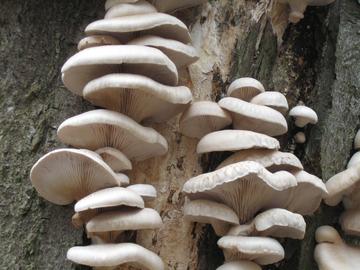
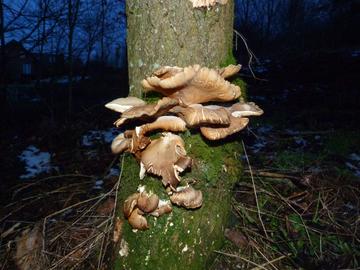
The photos on this page are just some examples of what the fruiting bodies of the non-poisonous Oyster Mushroom (Pleurotus ostreatus) might look like. (Photographs taken by Ann Miller).
Why do they need monitoring?
In common with other organisms across the planet, many fungi are at risk from factors such as habitat loss, pollution and climate change. For example, Climate change is affecting when fungi reproduce, with mushrooms turning up at different times of year; this may mean that the mycelium, which we can’t see, is also working differently, which could impact fungi’s roles in natural ecosystems.
What did we do?
10 logs were colonised with the non-poisonous Oyster Mushroom. Half the logs were placed at each of two sites, beside the well-frequented road from the Sawmill to the Chalet; temperature and moisture sensors were placed nearby. Visitors to the Woods were invited to complete a short form to let us know whether or not fungi were present, and if they thought it could be Oyster Mushroom, based on photographs accompanying the form; they were invited to submit photographs of fungi on the logs. Based on this information the researcher would visit the logs to check whether observed fungi might be Oyster Mushrooms. Observations were linked with local microclimate data.
What did we learn?
We did not see any Oyster Mushrooms over the course of the experiment; this is most likely due to other fungi already present within the logs outcompeting the Oyster Mushroom mycelium.
However, thanks to the many and regular observations submitted by visitors, we have frequent-enough observations to be sure that Oyster Mushrooms didn’t fruit on the logs. This shows that having an information board with QR code as a method for passers-by to submit observations could potentially be successfully used for other fungi projects.
From submitted observations and in-person checks we know that there were King Alfred’s Cakes fungi (Daldinia concentrica) on logs at both stations; there were other fungi that did not grow large enough to be confidently identified.
Thank you
We are extremely grateful to everyone who took part. We had ca 150 observations over the course of the project, an average of 6 per month.
As we do not collect personal information we can’t say how many individuals have contributed to the project, but we hugely value the time and interest of everyone involved. Your time and contributions made this project possible and have helped develop new ways of studying fungi.
We will be writing a more detailed piece about the project to share with other mycologists, which will be posted here in due course. We are also exploring other potential citizen science fungi projects at Wytham Woods.
Help document Wytham woods by uploading to Chronolog.io, a photo tool powered by people like you.
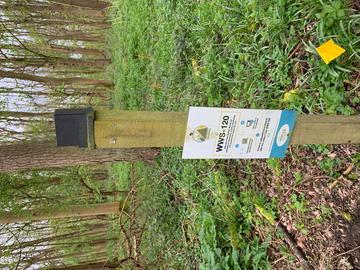
Simply send a photo to: upload@chronolog.io using the reference number in the box, for example WWS-120, in the subject line and then attaching the photo to the blank email.
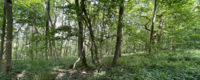
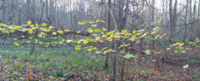
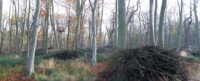
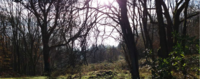
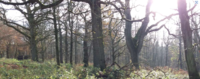
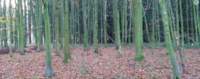
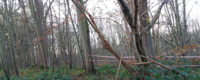
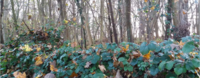
Below you can see an example of one of our 21 chronolog boxes that you will see dotted around. We have also listed all the boxes in the table at the bottom of this page so you can easily view and access them as you walk through the woods.
|
|
|

|
|
|
|
|
|
|
|

|

|
|
|
|
|
|
|
|
|
|
|
|

|
|
|

